Interview: In Praise of the Street Kiosk
Emilia Chegini in conversation with Mark Bessoudo for Here & Now

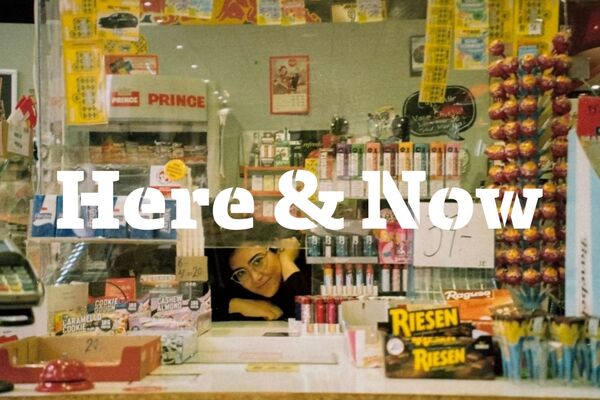
For Emilia Chegini, the kiosk is more than just a small retail structure on the corner of a street. It is a social device, a family enterprise, a neighbourhood landmark and, increasingly, an endangered urban condition. Chegini, a Swedish architect educated at the University of Dundee and now practising in Shanghai, grew up around her father’s kiosk and later reflected on its wider meaning in her essay that won the 2024 RIBAJ / Future Architects writing competition. In it, she argues that the disappearance of kiosks signals the erosion of everyday urban relationships that many take for granted. Here & Now editor Mark Bessoudo spoke with her about street kiosks, urban life and the everyday social ties that hold neighbourhoods together.
MB: Your award-winning essay describes what you call “the death of the kiosk”. What do you mean by that, and why should cities care?
EC: That essay was quite personal for me because I grew up around kiosks. My father, who immigrated to Sweden, ran a small neighbourhood kiosk when I was growing up. But in many cities these small, family-run kiosks are disappearing. Rising rents, chain convenience stores and changing consumer habits are slowly pushing them out of neighbourhoods.
When I talk about the death of the kiosk, I’m referring to that process and to the urban condition that disappears along with it.
If my family’s kiosk were taken down tomorrow, a 7-Eleven or something similar would probably replace it very quickly. Those chain stores are very strategic and polished, but they’re also sterile. They don’t have the same magic as a kiosk, which comes from familiarity between the owner and the people who pass by every day, whether they’re grabbing a coffee on the way to work or stopping for a quick snack in the afternoon. When that disappears, it’s not just the kiosk that changes, it’s the whole atmosphere around it that changes as well.
MB: Kiosks often look like simple convenience retail, but you suggest they play a social role in neighbourhood life. How does that work?
EC: It’s related to what sociologists call “weak ties”.Kiosks create countless small connections between people who didn’t necessarily know each other well, where customers occupy a middle ground between anonymous and familiar. For example, my father kept what he called a “black book”. If someone didn’t have money for a drink or a snack, he would write it down and they could pay later. They might not even know each other’s names properly, but there was a familiarity built through routine and that repeated interaction built trust.
MB: How do kiosks differ from cafés or other local businesses that also build regular customers?
EC: In many ways they are quite similar. Both can be family-run, informal places where regulars gather. The biggest difference is probably not what is being sold but how the interaction happens.
A café usually involves customers staying for a while. A kiosk works through quick encounters. It’s a 15- or 30-second exchange. Because of that there is a different level of informality. It’s acceptable for a kiosk to feel slightly chaotic. You step up, pick something from the display, perhaps talk briefly and move on. That informality is something chain stores struggle to reproduce.
MB: Some people might assume changing consumer habits — health consciousness or digital services replacing things once sold at kiosks — are also playing a role. Do you see that?
EC: Kiosks tend to reflect demand rather than create it. They adapt to whatever a neighbourhood needs. If people suddenly wanted smoothies instead of fizzy drinks, a kiosk would simply start selling smoothies.
The more interesting question is whether we measure the kiosk only through the products it sells. If we look at it as a civic element — something that reduces social isolation — then the calculation changes. It would be fascinating to compare neighbourhoods with kiosks and neighbourhoods without them. Are people happier? Do they feel less lonely? Those are also forms of public health.
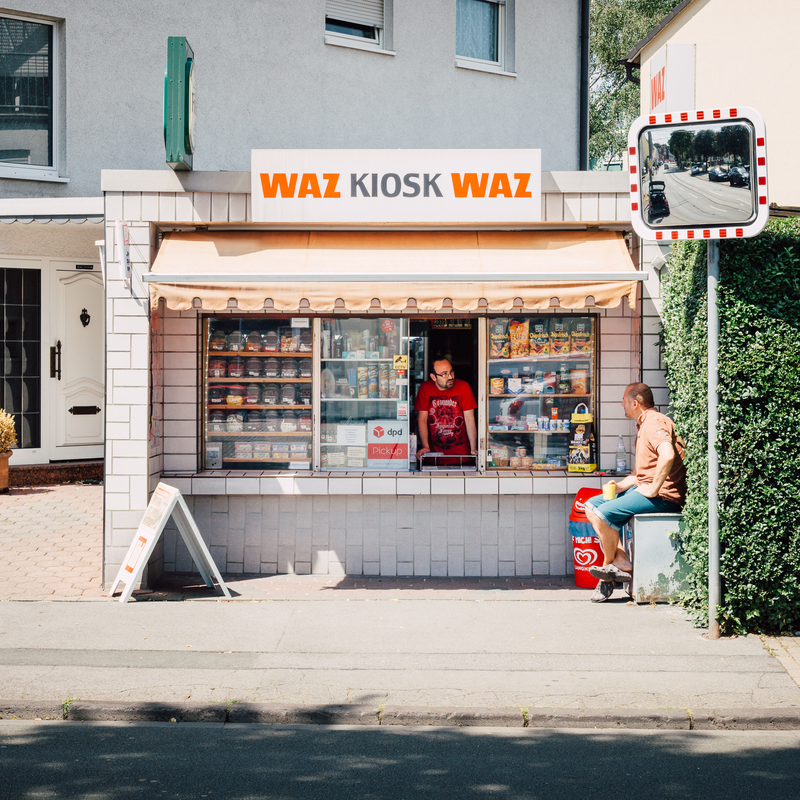
MB: How would you like to see urban planners pay more attention to kiosks? What do you think planners often misunderstand about them?
EC: I wouldn’t say I have a direct message for urban planners, but I do think kiosks should be seen less as objects and more as part of the life of a neighbourhood.
In many new developments everything is very clean and finished. There’s a narrative that new places should look orderly and perfect. But kiosks don’t really fit into that environment.
For me the idea of a kiosk is that it grows in the cracks of a city. It appears where there is a bit of leftover space, where people pass by and a small business can slowly take root. If you try to design that too precisely from the beginning, something essential gets lost. Sometimes cities need to leave room for things to emerge organically.
MB: Recently there was a widely reported story in London about a much-loved newsagent kiosk inside Brixton Underground station closing after 36 years because the cost of rent doubled. The reaction was extraordinary, with many people, from acclaimed food critics to documentary filmmakers, sharing memories and expressing grief over losing it. What do you think that reaction reflects?
EC: I think it shows how these places are just there and people don’t really question them. You pass them every day and they become part of your routine.
But when they disappear people realise what they meant. In many cases it’s the same person or the same family running it for decades, so it becomes part of the neighbourhood. At the same time, rents are rising and many of the things kiosks once sold are no longer needed in the same way, so even places people care about can become difficult to sustain.
MB: If kiosks continue to disappear, what do you think cities actually lose?
I think we lose small moments of familiarity. These places might seem very simple, but they are part of the rhythm of everyday life. They are places where you recognise people, where you have a quick exchange and where a neighbourhood quietly meets itself.
Once they’re gone, it’s very difficult to recreate that again. And that’s why cities should think carefully about how to leave space for these kinds of everyday encounters to survive.
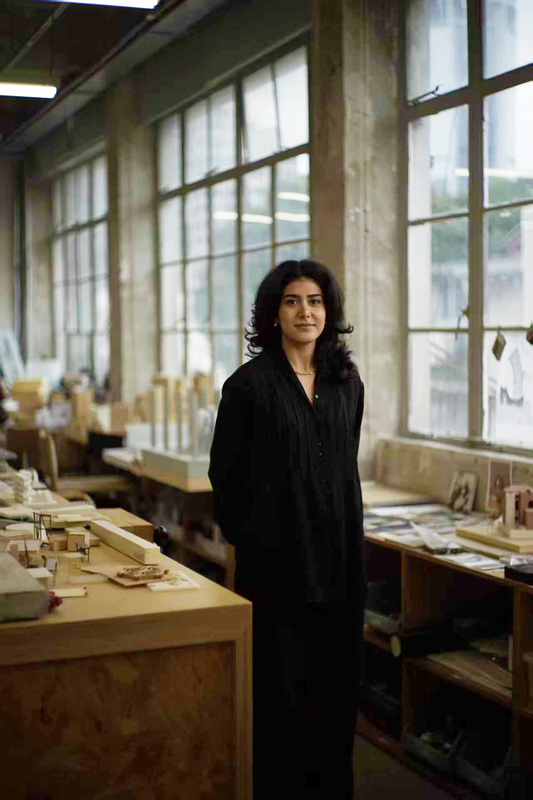
Emilia Chegini is an architectural designer, writer and co-founder of the rooms+cities collective whose work focuses on the overlooked infrastructures of everyday urban life. Through close observation of the mundane, she explores the kiosk as a spatial and social device that supports micro-economies, routine encounters, and forms of belonging.
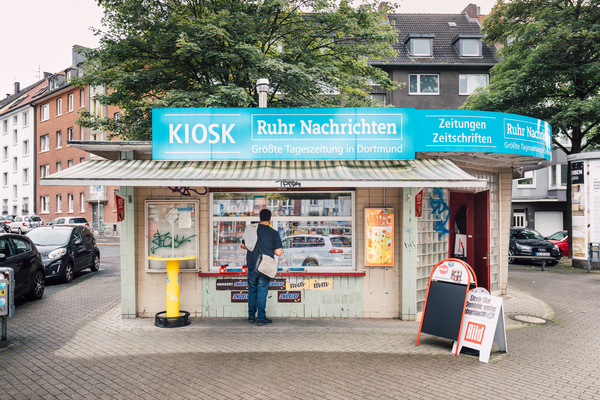
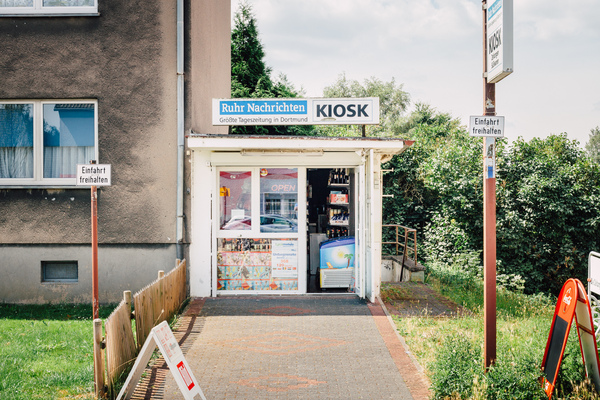
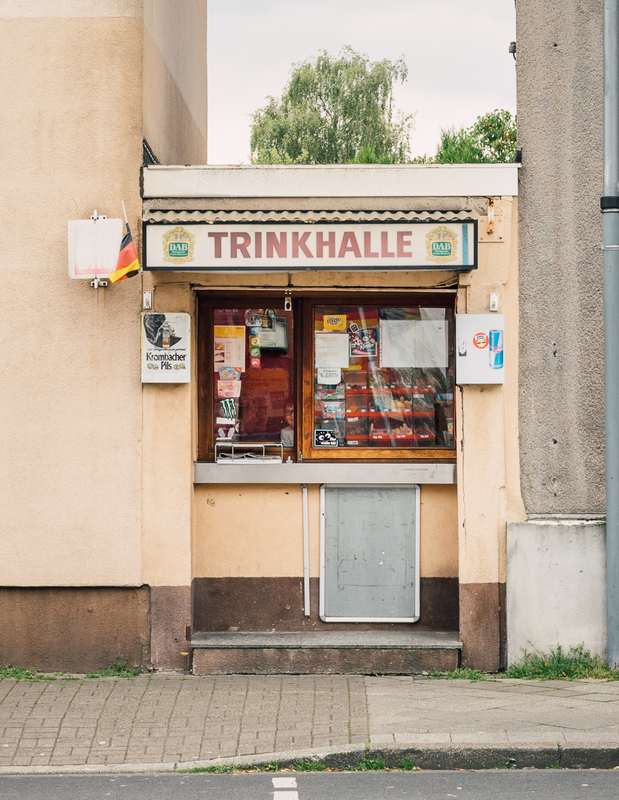
Imagery: Thumbnail photo - Emilia at her family’s kiosk in Lund, Sweden; All other kiosk photography courtesy of Reinaldo Coddou H, photographer and author of Treffpunkt Trinkhalle

This article is part of the Academy of Urbanism's Here & Now series.