High-Rise reflections (J.G. Ballard)
Alice Mayhew reflects on the most recent discussion of the Young Urbanist London Book Club

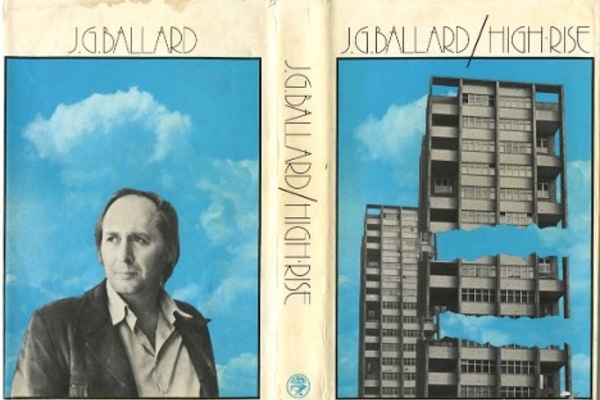
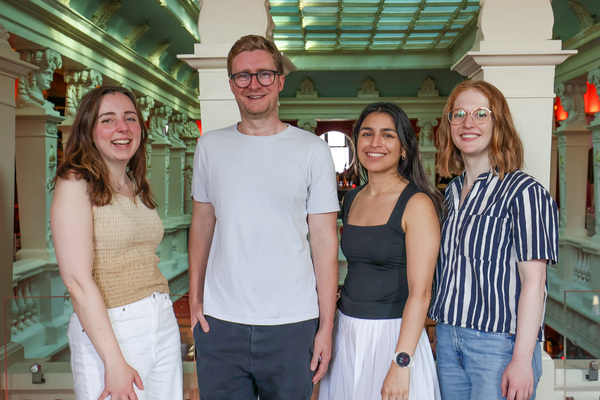
Braving last Wednesday’s sweltering weather, London’s Young Urbanist book group gathered in Southbank’s Royal Festival Hall to discuss J.G. Ballard’s dystopian novel, High-Rise.
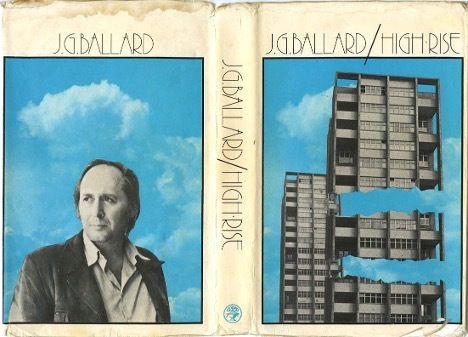
Ballard once reflected that he imagined his role as a writer to be "a kind of investigator, a scout who is sent on ahead to see if the water is drinkable or not." This role for artists is especially valuable in urbanism, where the capital intensity and long timescales of development allow design fashions to be realised at scale before their consequences can be understood, by which point their mistakes may endure for generations. High-Rise was published in 1975, as the first glow of modernism had begun to fade, marred by reports of social breakdown, failing maintenance and the shortcomings of ambitious housing estates like the Trellick Tower. Developing these emerging anxieties, Ballard pushes contemporary planning ideals of cities as complete, optimised machines to their logical extreme, asking whether community dynamics are too complex to be contained within a single totalising design. It was a stimulating provocation for a group of built environment professionals in an industry increasingly grappling with questions of density and urban intensification.
Summarising the novel, a cohort of apparently rational and successful protagonists settle into the eponymous 40-storey tower which stands alone within a vast car park on the edge of London. The building provides every necessity of daily life, with a shopping concourse and leisure amenities concentrated on the tenth floor, drawing almost all activity indoors. Social status is objectively determined by the height of residents' flats. Beginning with trivial protests, residents' responses to mechanical breakdowns and rigid hierarchy escalates to deranged acts of sabotage and violence as they seek to maintain or improve their position within the tower. Rather than fleeing the social breakdown, they abandon the restraints of civilisation to indulge increasingly primitive impulses, culminating in mass death through neglect and violence. Ballard suggests that a life mediated entirely through a single system, socially, materially and psychologically, cultivates both conflict and dependency, leaving its inhabitants vulnerable when that system begins to fail.
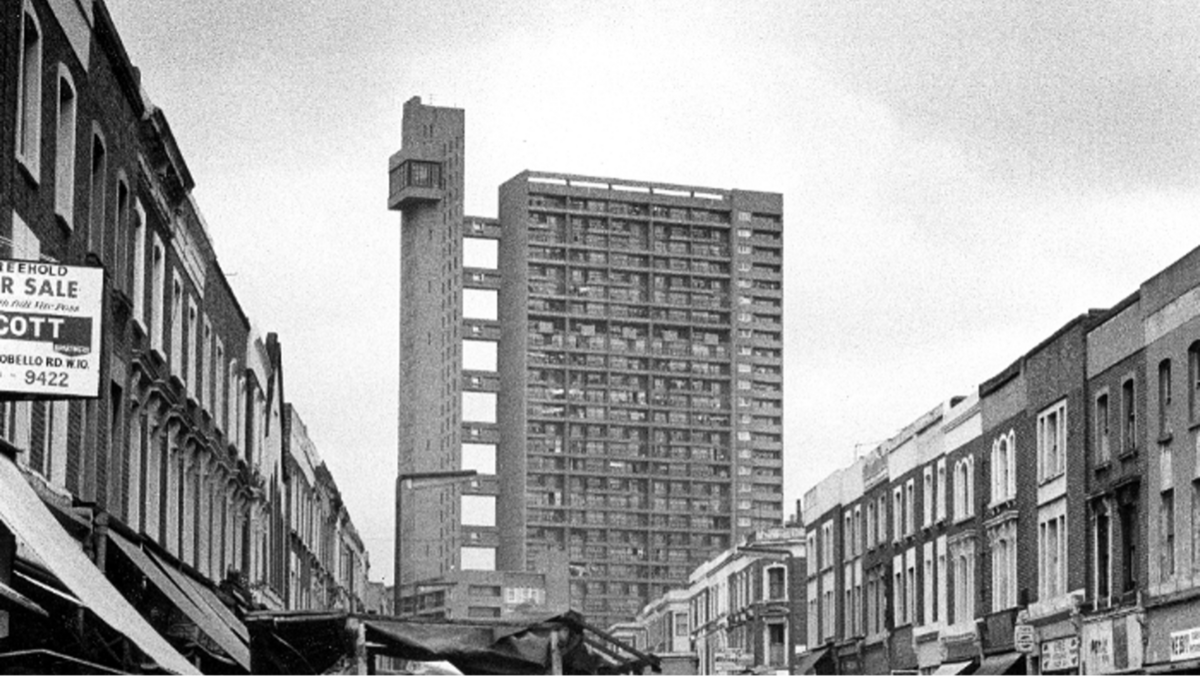
From this starting point, book club discussion explored the relationship between architecture, community and human behaviour, and the parallels they drew to modern urbanism. Regardless of their best intentions, today's masterplanned neighbourhoods are often conceived of as complete environments, shaped by the vision of a relatively small number of designers rather than emerging gradually through generations of adaptation. Like Ballard's tower, this risks creating places that struggle to accommodate evolving social needs or empower residents to reshape them from the bottom up.
Members noted that this tendency extends beyond new developments to older cities that have become increasingly managed. In London, informal opportunities for children to play, neighbours to meet, or public space to evolve organically have steadily diminished, replaced by bookable, programmed and supervised spaces that leave little room for spontaneous interaction.
The tower's dependence on lifts, power and deliveries also resonated strongly. Recent experiences of supply chain disruption have made the fragility of highly integrated systems far more tangible. When every aspect of daily life depends upon a single interconnected infrastructure, technical failures quickly become social ones.
The discussion concluded by reflecting that every generation inherits the unintended consequences of the previous generation's urban utopia. It was concluded that if post-war modernism overestimated the capacity of comprehensive planning to engineer community, today's proliferation of low-density residential extensions without centres or high streets may equally be reinforcing social individualism. In contrast, the group's own imaginings of urban utopias centered on mid-rise neighbourhoods organised around shared courtyards, mixed-use amenities and buildings capable of accommodating changing uses over time. It was acknowledged that the lesson of High-Rise might not be to abandon ambitious city-making, but to recognise that the most resilient places are those able to evolve beyond the intentions of their designers.
Written by Alice Mayhew